
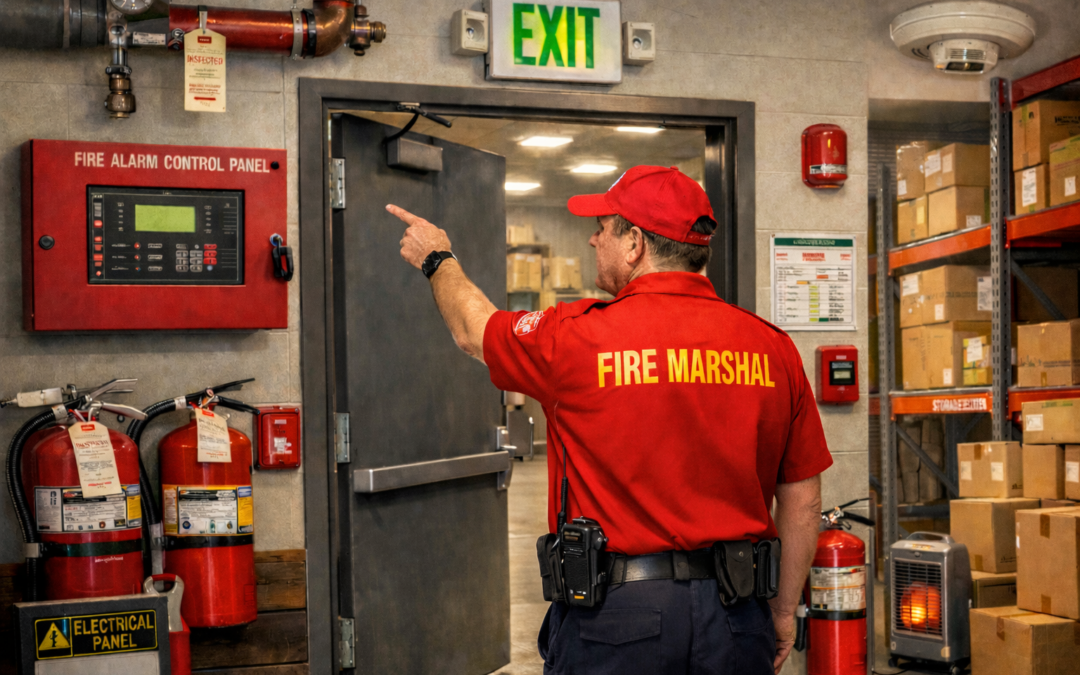
You got the inspection notice, and your property’s inspection with the Fire Marshal from your AHJ (Authority Having Jurisdiction) is coming up. Now what?
Think of the Fire Marshal or Fire Inspector as the state inspector that completes the required inspections on your car, and Independence Fire Sprinkler as your mechanic. We keep your “vehicle” (fire protection system) working all year, and are on-call when something breaks, so that everything is always compliant and functional – especially when it’s time for your inspection with the Fire Marshal.
When the Fire Marshal or Inspector arrives for your required inspection, they are typically following a few different fire codes. Most AHJ’s are required to adopt and follow the International Fire Code, the National Fire Protection Life Safety Code, and sometimes other ordinances that are specific to the county or township.
Some of the main focuses of a Fire Marshal’s inspection include, but are not limited to:
Exits. This includes means of exit and ensuring people can properly escape the property in case of a fire, as well as areas outside of exits and exit/emergency lights if applicable.
Fire Protection Systems. While Fire Marshals don’t re-test everything or diagnose issues the way fire protection companies do, they do ensure that your property’s fire protection systems have been regularly checked by verifying inspection tags. They ensure that the clearance of sprinkler heads meet code requirements, that there are no troubles with alarm panels, and that extinguishers are correctly mounted and inspected.
Storage. Following fire code for storage is especially critical for warehouses, as fire codes require specific measurements regarding storage and material placement in terms of closeness to ceilings, electrical panels, and more. This ensures combustibles are not placed too close to electrical sources, and that sprinkler heads are at the right distance for maximum efficiency.
Electrical/Heat Source Hazards. Electrical and heat sources are some of the most common causes of fires, so Fire Marshals must ensure that they are being used correctly. This includes overloaded power strips, exposed wiring, cooking appliances being improperly used or placed too close to combustibles, and more.
Fire Doors. While it’s typically an easy fix, fire door issues are the most frequent kinds of violations found during inspections. They must close and open properly, have no damage or missing hardware, and contain the proper labeling.
Fire Marshals may also ask for documentation of annual sprinkler or alarm inspection reports, as well as emergency evacuation plans. Even if no issues are found throughout your inspection, inability to provide documentation of inspections can also be a violation.
What can cause an unexpected visit from the Fire Department?
Sometimes, Fire Marshals may conduct unscheduled inspections. There are a few different reasons why this may happen, and it’s even more of a reason why your properties should always be in compliance of fire codes (not just before your scheduled inspection).
Reports made. If a complaint or report is made regarding a possible violation in your property, this can cause an unscheduled inspection.
Failed System Inspections. If your property failed a system inspection completed by your fire protection system, or your recent Fire Department inspection, and you have failed to acknowledge the issue, this may also cause the Fire Department to show up without warning. Typically, the Fire Department will require a re-inspection if the first one fails, and attempt to reschedule.
Repeat Alarm Activation. If your alarm is frequently going off and contacting the fire department, this is also reason for inspection. Even if it is a false alarm, this suggests an issue with your alarm panel is being ignored, and that you are due for an inspection or repair from your fire protection company.
Don’t wait until the last minute to keep your properties safe. Staying compliant with fire codes and keeping your fire protection systems in check will protect you from unnecessary fines, closures, legal issues, and tragedy.