
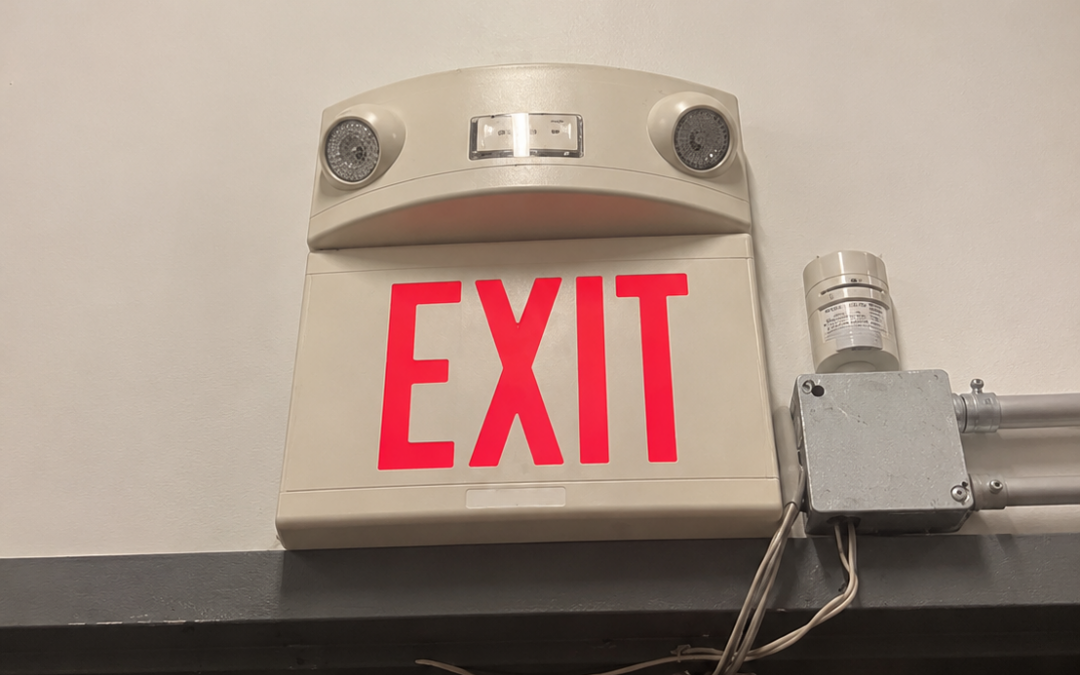
Why Emergency and Exit Lights Are Critical for Life Safety
When an emergency strikes, every second matters. Whether it’s a fire, power outage, or other unexpected event, occupants must be able to quickly identify the safest path out of a building. Emergency and exit lighting systems play a vital role in protecting lives by providing illumination when normal lighting fails. These systems are not just recommended, but they are required by the NFPA as they significantly reduce confusion, panic, and the risk of injury during an evacuation.
Properly installed, tested, and maintained emergency and exit lighting helps ensure your building remains code compliant while providing peace of mind that occupants can evacuate safely when it matters most.
What Are Emergency and Exit Lights?
Although often mentioned together, emergency lights and exit signs serve different purposes.
Exit signs identify the location of exit doors and the path leading to them. These illuminated signs remain visible during both normal operation and power outages, allowing occupants to quickly recognize available exits.
Emergency lighting automatically activates when normal electrical power is interrupted. Battery-backed or generator-powered fixtures illuminate exit access corridors, stairwells, ramps, and other portions of the means of egress so occupants can safely navigate the building.
Together, these systems create a continuous, illuminated evacuation path from anywhere within a building to a safe exit.
Why Emergency and Exit Lights Matter
A sudden loss of power can instantly create hazardous conditions. Smoke, darkness, or unfamiliar surroundings can make it difficult for occupants to find exits, especially in commercial buildings, schools, healthcare facilities, warehouses, hotels, and apartment complexes where long hallways and corridors can lead to confusion and danger.
Proper emergency lighting provides several important benefits:
- Helps occupants safely locate exits during emergencies.
- Reduces panic by providing visible escape routes.
- Minimizes trips, falls, and other evacuation injuries.
- Supports first responders as they enter the building.
- Helps building owners remain compliant with fire and life safety regulations.
Even buildings equipped with automatic fire alarm and sprinkler systems still rely on emergency lighting to safely guide occupants during an evacuation.
NFPA Code Requirements
The installation and maintenance of emergency and exit lighting are governed primarily by NFPA 101, Life Safety Code and NFPA 70, National Electrical Code (NEC).
Emergency Lighting Duration
NFPA 101 requires emergency lighting systems to automatically illuminate the means of egress upon loss of normal power. The emergency power source must be capable of operating for at least 90 minutes.
The code also specifies minimum illumination levels along the means of egress to provide adequate visibility for occupants during evacuation.
Exit Sign Illumination
Exit signs are required to be:
- Clearly visible and readily distinguishable.
- Continuously illuminated whenever the building is occupied.
- Connected to a reliable emergency power source so they remain illuminated during power failures.
Exit signs must also be placed so that occupants can easily identify the direction of travel toward an exit.
Monthly and Annual Testing
Routine testing is one of the most commonly overlooked maintenance requirements. According to NFPA 101, battery-powered emergency lighting equipment should be tested:
- Monthly: Operate each unit for at least 30 seconds to verify proper operation.
- Annually: Conduct a 90-minute discharge test to ensure the battery can sustain the required emergency operation.
Documentation of these inspections and tests should be maintained for review by the Authority Having Jurisdiction (AHJ).
Common Issues Found During Inspections
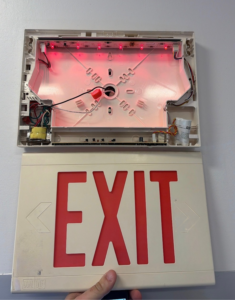
During routine inspections, technicians frequently identify deficiencies that can compromise occupant safety, including:
- Burned-out or dim exit signs
- Dead or deteriorated batteries
- Damaged fixture housings
- Obstructed exit signs
- Emergency lights that fail to activate during testing
- Missing or improperly aimed emergency light heads
- Lack of required inspection documentation
Many of these problems develop gradually and may go unnoticed until an emergency or code inspection occurs.
The Importance of Routine Maintenance
Emergency lighting systems are designed to remain on standby for years while still functioning immediately during an emergency. Because batteries naturally degrade over time, regular inspections and testing are essential to verify the equipment will perform as intended.
Preventive maintenance helps:
- Identify failing batteries before they fail completely.
- Ensure fixtures provide adequate illumination.
- Verify code compliance.
- Reduce the likelihood of violations or costly repairs.
- Improve overall life safety for occupants and visitors.
Partnering with a qualified fire protection company ensures testing is completed according to current NFPA requirements and that deficiencies are corrected promptly.
Protect Your Building and Its Occupants
Emergency and exit lighting may only be used during rare emergencies, but their importance cannot be overstated. These systems provide critical guidance during power failures and fire emergencies, helping occupants evacuate safely while supporting first responders.
Building owners and property managers should make emergency lighting inspections and testing a regular part of their life safety program. Staying proactive not only helps maintain compliance with NFPA codes but also demonstrates a commitment to protecting everyone who enters your facility.
If your emergency or exit lighting system has not been inspected recently, scheduling routine testing today can help ensure your building is prepared when every second counts.