
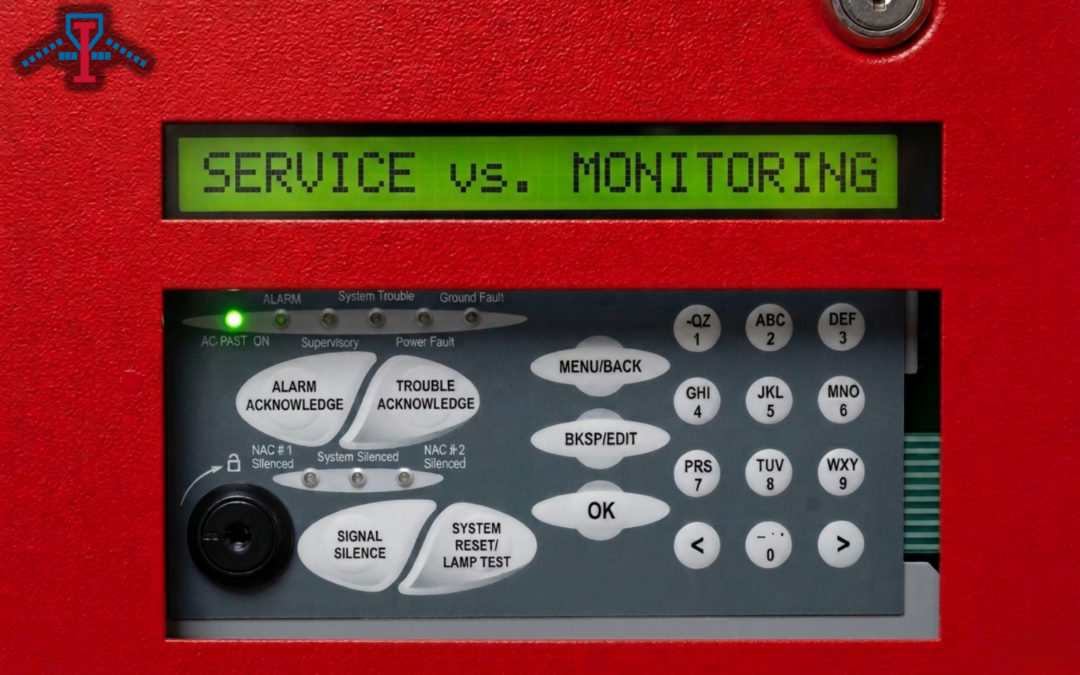
When it comes to protecting your building, fire alarm systems play a critical role in life safety, property protection, and code compliance. However, many property owners and facility managers don’t realize that fire alarm “service” and fire alarm “monitoring” are actually two separate functions.
While both are essential, they serve very different purposes. Understanding the difference can help you make better decisions for your building, and can also show why working with one company that handles both inspections/service and monitoring can make your life significantly easier.
What Are Fire Alarm Services and Inspections?
Fire alarm services and inspections focus on the physical condition and functionality of your fire alarm system. These services are performed by licensed technicians who inspect, test, repair, and maintain the equipment throughout your building.
This typically includes:
- Testing smoke detectors and pull stations
- Inspecting fire alarm control panels
- Verifying horn and strobe operation
- Checking communication pathways
- Replacing batteries and damaged devices
- Troubleshooting trouble signals or false alarms
- Performing annual or semi-annual inspections required by code
Routine inspections are critical because fire alarm systems can experience wear over time. Dust buildup, aging components, wiring issues, dead batteries, or damaged devices can all impact performance. Regular service helps identify problems before they lead to system failures during an emergency.
In many commercial buildings, inspections are also required to remain compliant with local fire codes, insurance requirements, and NFPA standards.
What Is Fire Alarm Monitoring?
Fire alarm monitoring is different from inspections and maintenance. Monitoring refers to the 24/7 supervision of your fire alarm system by a central monitoring station.
When your system detects smoke, heat, water flow, or another alarm condition, the monitoring station receives a signal immediately. From there, trained operators can notify emergency responders and designated building contacts.
Monitoring can also alert building owners to:
- Trouble conditions
- Communication failures
- Low batteries
- Power outages
- Supervisory conditions
- Tamper alerts
Without monitoring, a fire alarm system may still sound locally inside the building, but emergency responders may not automatically be notified, especially if the building is vacant or occupied after hours.
Monitoring adds another layer of protection by ensuring alarms are acted on quickly, even when nobody is onsite.
Why These Services Work Best Together
Although inspections and monitoring are separate functions, they are closely connected. When one company handles both, communication becomes much more streamlined.
For example, if a monitoring station receives repeated trouble signals from your building, the same company can quickly dispatch a technician who already understands your system. There is no need to coordinate between multiple vendors or explain the issue repeatedly.
Likewise, if a technician notices communication problems during an inspection, they can coordinate directly with the monitoring department to verify signals and resolve issues immediately.
Having one provider manage both services often leads to:
Faster Problem Resolution
Instead of going back and forth between separate monitoring companies and service providers, one company can identify and solve issues more efficiently.
Better System Familiarity
A single provider becomes familiar with your building layout, equipment history, previous repairs, and inspection reports. This helps technicians troubleshoot faster and recommend more effective solutions.
Simplified Scheduling and Communication
Managing inspections, service calls, monitoring renewals, and emergency contacts through multiple vendors can become complicated. Working with one company creates a single point of contact for all fire alarm needs.
Improved Accountability
When separate companies handle monitoring and service, responsibility can sometimes become unclear when problems arise. One company overseeing both services creates clearer accountability and fewer delays.
Easier Compliance Tracking
Many companies that provide both services can also help maintain inspection records, testing documentation, and monitoring reports needed for AHJ inspections or insurance requirements.
A More Proactive Approach to Fire Protection
One of the biggest advantages of combining fire alarm service and monitoring is the ability to take a more proactive approach to fire protection.
For example, monitoring stations may detect recurring trouble conditions long before they become major failures. Instead of waiting until your annual inspection uncovers a problem, technicians can respond earlier and prevent larger issues from developing.
This proactive communication can help reduce emergency service calls, false alarms, compliance issues, and expensive repairs. Ultimately, it creates a more reliable system and greater peace of mind for building owners and occupants alike.
Choosing the Right Fire Protection Partner
Not all fire protection providers offer both service and monitoring capabilities. When evaluating companies, it’s important to ask:
- Do they provide in-house monitoring?
- Can they service and inspect all system types?
- How quickly can they respond to trouble conditions?
- Do they offer 24/7 support?
- Can they help manage compliance documentation?
Choosing a company that can fully support your fire alarm system from inspection to emergency response coordination can simplify building management while improving overall system reliability.